Social customer relationship management is a strategy that allows organizations to create better and more powerful engagement. I’m here to dive more into depth about Social CRM to help you better understand what it entails and how it can help you!
Get Started
Social CRM helps to combine all information pulled from social media, and it uses CRM analytics to determine how an organization can best use this information. Social CRM adds in the social data points so organizations, like yours, can better track and measure their audience behaviours online (Adams, 2018).
How can social CRM benefit you?
- You can create more meaningful engagement
- You can create brand advocates
- You can collect important data
- It can help construct your brand’s image and conversations online
You can add social CRM to your strategy through marketing, sales, customer service and support, as well as customer experience!
- Marketing: monitor, analyze and respond to customer conversations
- Sales: understanding where prospects are discussing products and services
- Customer Service and Support: real-time, multi-channel support
- Customer Experience: understand customers’ needs and wants and creating an exceptional, unique experience for them
My key tip for you is to listen to your audience, act on that information, and have a social CRM strategy in place to do both!
Choosing a social CRM platform gives your organization all the tools it needs to grow in one central location. There are three main ways that social CRM platforms are set up to help an organization.
- Sales: looking to automate and boost sales
- Marketing: looking to streamline finding and engaging with customers and prospects
- Customer Service and Support: looking to deliver outstanding and responsive customer support
What should you look for in a social CRM platform? The list is endless, but I’ll name a few must haves:
- Support for social media platforms
- Brand monitoring
- Social CRM analytics
- Integration with your other platforms or services
- Features that fit your current needs and will allow for future growth
There are many CRM platforms to choose from such as: Salesforce Marketing Cloud, SproutSocial, and Zoho CRM.



Develop Your Strategy

A strong and effective social CRM strategy can build your organization’s brand while creating fans and brand ambassadors. Your brand is the overall impression, resulting from communication and marketing strategies, of your product or company that is distinguished from your competitors (Adams, 2018).
The key components from a brand’s toolbox include the identity and communication (logos, trademarks, brand awareness, brand loyalty, and various branding strategies).
How do you ensure brand consistency using social CRM? There are two factors to consider:
- Humanization: have an “easy to connect with” personality versus being a faceless entity (people connect with people, join in on the conversation people are having about your brand)
- Personalization: allow customers to choose and shape their own experience with your brand (make it their own)
Social CRM helps you monitor your brand’s image across all your social media platforms, and you can see how your message is resonating with your intended audience. Social CRM helps you determine the value in every social media conversation you have with customers, leads, and brand advocates. You can engage with these prospects and customers in a collaborative way to help generate leads, foster loyalty, and increase revenue (Adams, 2018).
It is crucial that you lay out clearly defined rules. These rules will set the standard for every prospect and customer interaction. Defined rules of engagement will get your organization on the same page in all of their social CRM activities while providing trust and transparency for the customer. Rules can allow for efficient and effective communication with consumers (Adams, 2018).
Rules of engagement:
- Tone and personality (how you interact with prospects and customers)
- Create set responses to specific situations
- Personalized responses
- Guidelines for communicating company-wide announcements
It is important to communicate to your customers how you can be reached. A social bio should include appropriate customer support numbers and emails; make it clear how to make contact and the expected response time. Ensure you respond promptly to show your commitment to the customer. Be proactive in your responses by communicating issues that will affect the customer base, provide consistent updates until the issue is resolved, and demonstrate that you’re on top of the issue striving for a quick resolution. This will show your customers that you care and are aware of any issues, resulting in a reduced number of customer complaints. Creating a dedicated social media support account helps to centralize your social CRM activity. Twitter is a great platform for organizations’ support accounts (ex. @XboxSupport).
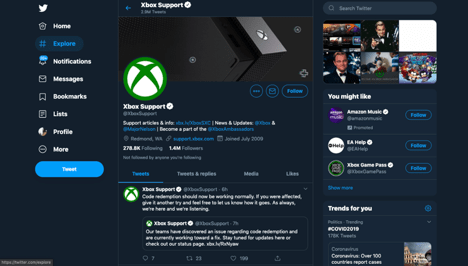
A good way to humanize your conversations with customers on a social media platform is to let them know they’re talking to a real person. A good example of this would be adding your initials to a tweet or including your name name and Twitter handles to an account bio. This demonstrates legitimate concern towards the consumer. It’s crucial to know when to take concerns and problems you may encounter with customers offline. You can move to secure communication platforms such as email or phone number, adding an element of safety and privacy to the situation. This helps customers feel more comfortable
Now you need to come up with a campaign targeted to your specific audience! There are two terms you need to understand before we move forward.
- Focus Targeting: creating highly individualized and targeting messages that strongly appeal to the customer
- Segmentation: a process of understanding why people buy products and services and which of those people you should market to
Once you’ve chosen who you want to target and segmented your consumers into meaningful groups, it’s then time to individualize your marketing message. This is where you can personalize your content. Personalized content will enable you to individualize and tailor your content to directly speak to your customers. Personalized messages can lead to improved response rates, stronger brand perception, and increased revenue! Personalizing your content will allow you to focus more on your consumers and less on the product.
A tip to personalize your content is to identify influencers for your brand to increase social referrals. I’ll dive deeper into that, next!
Manage Social CRM
What is an influencer? An influencer is an individual who is active on social media platforms and has the capability to expose your brand to their followers. This can be done through a post, tweet, or YouTube video. Using influencers in your marketing strategy is the practice of building relationships with the people who can build relationships for your brand (Adams, 2018). Influencers can grow your business because they have the power to drive actions from their followers and subscribers.

How can you identify influencers?
- Look at audience and advocacy
- Relevance
- Reach
- Engagement
How can you find influencers?
- Social media monitoring
- Hashtags
- Google Alerts
- Blogger Outreach
Finding influencers can grow your company and bring awareness to the value you can provide consumers! If you follow credible individuals, celebrities, YouTubers, or bloggers you may notice that they’re doing a paid partnership with a company. This means they get paid to promote products or services a company offers and it’s a great way for people to take action and become aware of a certain company or organization!
It’s important that you can connect your content with prospects through social media. This allows consumers to learn more about what you can provide for them on their own time. Keep your content engaging by providing content that helps improve your customer’s life, monitor trending topics online, and listen to what your customers are saying online (Adams, 2018).
Customer service is the interaction between a customer and the company, usually through traditional channels like phone or email, to help resolve a customer request or issue. Social CRM is about customer retention and issue prevention. Make sure you monitor what is being said about your brand, identify the problems your customers are facing, and contact your customers in real-time (Adams, 2018). With customer service, you will receive positive feedback and negative. With negative feedback, there are four steps you should follow:
- Monitor internet for activity
- Bring relevant postings into customer support queue
- Facilitate employee collaboration
- Kick off resolution with the customer
This helps build a scalable, repeatable, and automatic customer support process addressing issues that surface via social channels. Now, remember. Every customer issue that arises on a social media platform is a marketing and public relations opportunity (Adams, 2018). You can demonstrate how much you value your customers in the way you handle question, concerns, and more on social media.
Your Toolkit
It is important that you document your business processes and use them consistently. Documentation always comes before tools! But, wait. What is documentation? Process documentation are documents that support a process, the activity of process discovery, process mapping software and policies, as well as procedure templates. This is what will help you grow and expand!
There are seven criteria when it comes to your business process success:
- Ownership
- Goals
- Metrics
- Interfaces
- Documentation
- Integrity
- Alignment with business vision
Although documentation is important so are your analytics. Analytics allows you to understand how your organization is performing to enhance customer experience.
“What gets measured, gets improved.” – Peter Drucker
Focus on customer feedback on social media platforms, engagement levels, customer satisfaction score (CSAT), and customer lifetime value. This will help you gain a deeper understanding of your customers so that you can better meet their needs!
Conclusion
I went over a lot of information about social customer relationship management and I hope you were able to learn a few valuable tips and tricks! I’ve learned quite a bit and social CRM have expanded my perspective on engagement and customer service with consumers. If I were to start my own business, I would create accounts on Instagram and Twitter to engage with my audience in a casual and informative matter. A dream of mine would be to start my own interior design company! Engaging with my audience through comments, likes, posts, stories and more by providing content that is valuable to their life can expand my business and brand image. I would post content of projects that I’ve done and renovations on people’s homes; this will give my consumers an idea of the work that I’ve done, and they have the freedom to investigate my work on their own time. I could also reach out to local bloggers or influencers and have them make content on the work I’ve done for them! This will allow me to build a relationship with influencers who have the capability to reach potential consumers and have them take action by reaching out to me. I hope you found this helpful and I’ll see you in my next blog 🙂
References
Adams, M. (2018, April 11). Social Media Marketing: Social CRM. Retrieved from LinkedIn Learning: https://www.linkedin.com/learning/social-media-marketing-social-crm/process-documentation
Pictures from Google.
 Malindi Pilgrim